Let’s be real. If you’ve ever tried to fry an egg in a stainless steel pan, you know the pain. It sticks. You scrape it. You curse. You end up with a scrambled mess and a pan that needs to soak for three hours.
On the other hand, if you’ve ever tried to sear a steak in a cheap non stick pan, you know the disappointment. It doesn’t get hot enough. It doesn’t brown. You end up with a gray, rubbery piece of meat.
So, which one is actually better? The truth is, neither one is perfect. They are tools built for different jobs. You don’t need to choose one and hate the other. You just need to understand how they work, what they are good at, and where they fail.
Here is the honest, no-nonsense guide to stainless steel vs non stick cookware, so you can stop wasting money on the wrong pans.
Disclosure: As an Amazon Associate, I earn from qualifying purchases. If you click on a link and make a purchase, I may receive a small commission at no extra cost to you.
The Non Stick Reality: The Egg Master
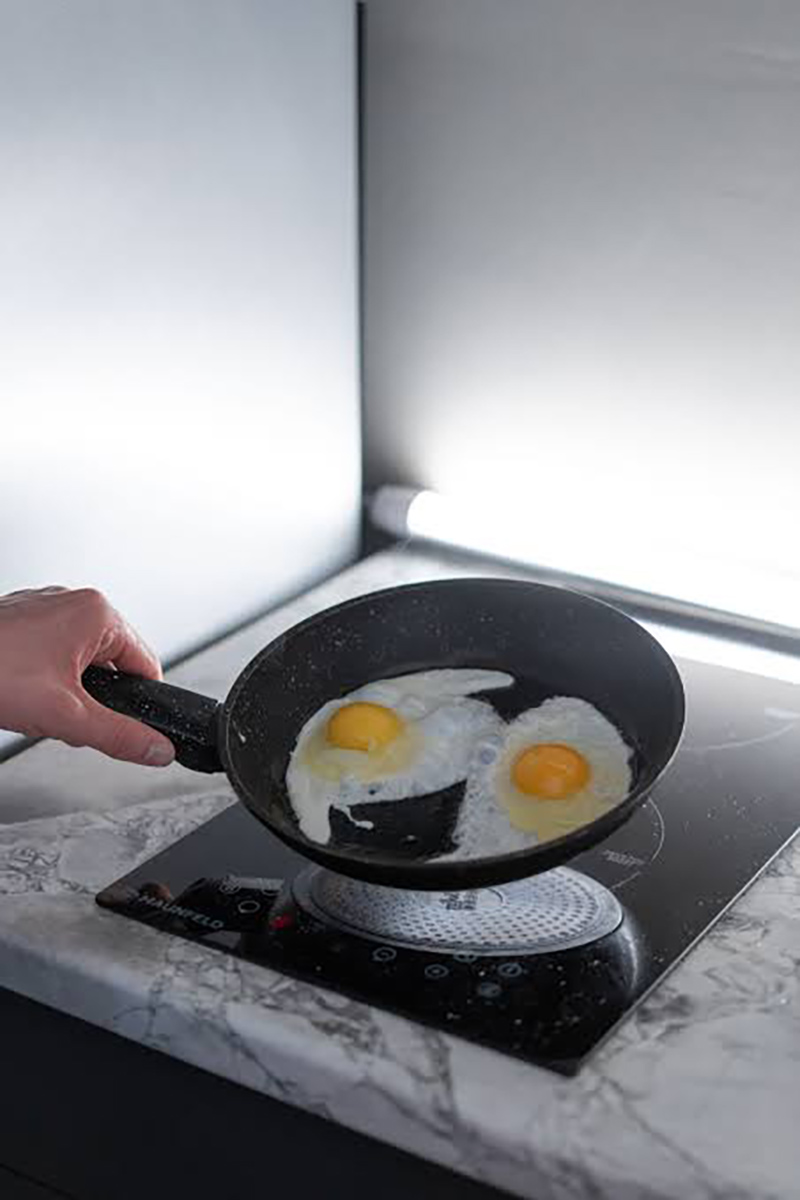
Let’s start with non stick because almost everyone has one. It’s the pan you reach for when you want scrambled eggs, pancakes, or a delicate piece of fish.
Why it works: Non stick pans are coated with a chemical compound (usually PTFE, known as Teflon) or ceramic. This coating fills in the microscopic pores of the metal, creating a surface so smooth that food has nothing to grab onto.
The Good:
- Zero Stick: You can cook eggs with almost no butter or oil. This is a game changer if you’re watching your calories.
- Easy Cleanup: You can literally wipe it out with a paper towel and it’s clean. No soaking required.
- Lightweight: They are usually made of aluminum, so they are light and easy to maneuver. If you have wrist pain, this matters.
- Cheap: You can buy a decent non-stick pan for $25.
The Bad:
- They Die: A non stick pan has a lifespan. Usually 1 to 3 years. Once the coating scratches, food starts sticking, and it’s time to throw it away. It’s a disposable item.
- Heat Limits: You cannot crank the heat on a non stick pan. Most are only safe up to 450°F (230°C). If you preheat an empty non stick pan on high, it can release toxic fumes. Never do this.
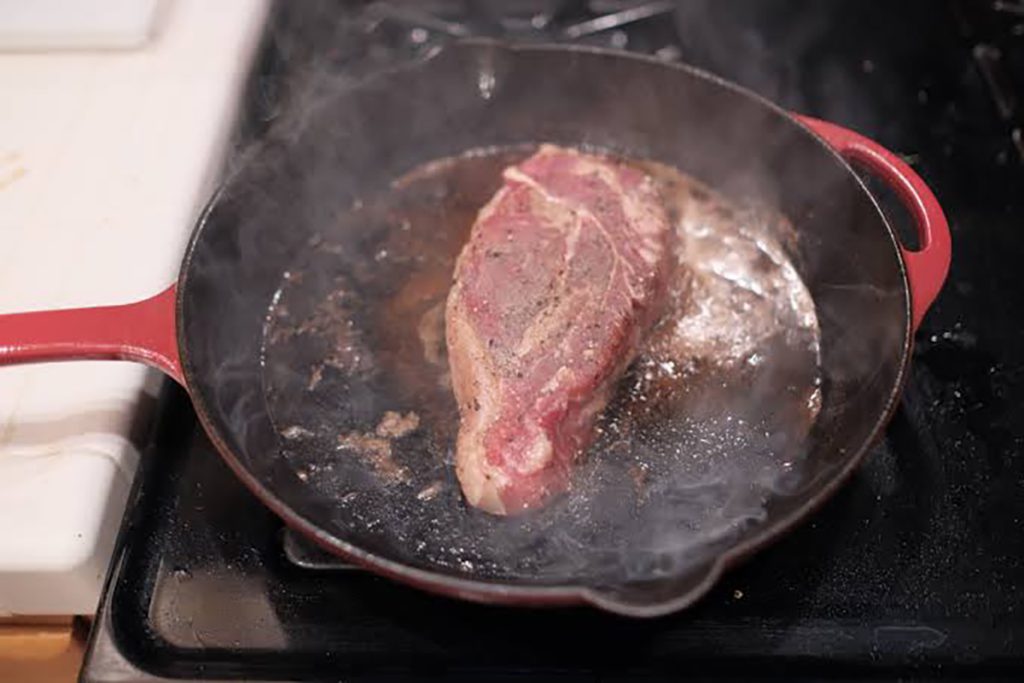
- No Searing: You can’t get a good brown crust on a steak. The pan just doesn’t get hot enough.
Who is it for? The busy person who wants a fast breakfast and an easy cleanup. If you cook eggs, pancakes, and grilled cheese, non-stick is your best friend.
The Stainless Steel Truth: The Steak Slinger
Stainless steel is what professional chefs use in restaurants. It looks beautiful. It feels heavy. It sears meat like nothing else. But it comes with a steep learning curve.
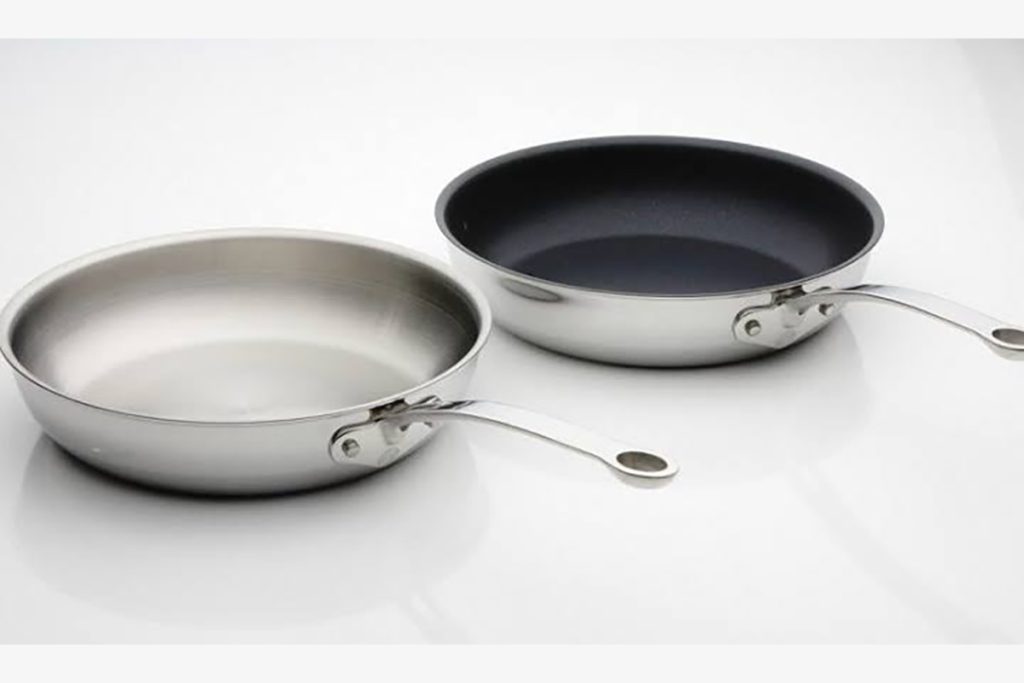
Why it works: Stainless steel itself doesn’t conduct heat very well. So, manufacturers sandwich a layer of aluminum or copper in between two layers of stainless steel. This is called “clad” construction. The aluminum core spreads the heat, and the stainless steel exterior provides a durable, non reactive cooking surface.
The Good:
- Incredible Searing: You can heat stainless steel to screaming hot temperatures to get a beautiful brown crust on meats and create a flavor packed “fond” for pan sauces.
- Indestructible: You can use metal utensils, put it in the oven at 500°F, wash it in the dishwasher, or drop it on the floor without chipping or scratching. It will last 20+ years.
- No Chemicals: There is no coating to flake off into your food.
- Versatile: Transition seamlessly from stovetop to oven to broiler without changing pans.
The Bad:
- Food Sticks: If you don’t preheat the pan properly or try to flip food too early, it will stick.
- You Need Fat: You can’t cook eggs without butter or oil.
- Cleaning is Work: Requires scrubbing and occasional use of specialized cleaners like Bar Keepers Friend for stubborn stains.
- Heavy: A quality clad pan requires some wrist strength to maneuver.
Who is it for? The home cook who wants restaurant quality steaks, pan sauces, and roasted meats and is willing to master proper preheating techniques.
Head to Head: The Ultimate Comparison
| Feature | Non-Stick | Stainless Steel |
| Best For | Eggs, pancakes, delicate fish | Searing, deglazing, oven use |
| Durability | 1-3 years | 20+ years |
| Heat Tolerance | Max 450°F | Up to 800°F+ |
| Sticking | Nothing sticks | Requires technique to prevent sticking |
| Cleaning | 10 seconds | 5-10 minutes of scrubbing |
| Oven Safe | Usually no (handles may melt) | Yes (all metal build) |
| Price | $25 – $50 | $50 – $200 |
| Health Considerations | Risk of chemical fumes if overheated | No chemical coatings |
The Health Question: Is Non Stick Safe?
Concern around non stick coatings often centers on PFAS (“forever chemicals”). Older non stick cookware used PFOA, which has been phased out. Modern non stick pans are PFOA free and use PTFE or ceramic coatings.
Is PTFE safe? Yes, as long as you keep temperatures below 450°F and never preheat an empty pan on high heat.
If you prefer to avoid synthetic coatings completely, consider Stainless Steel or Ceramic Non Stick (made from sand derived silicon dioxide). While ceramic coatings are free of PTFE/PFOA, keep in mind they tend to lose their non stick properties faster than traditional PTFE options.
How to Use Stainless Steel Without Sticking (The Pro Trick)
Preventing food from sticking to stainless steel comes down to temperature control:
- Place the dry pan on the stove over medium high heat.
- Let it preheat for 2-3 minutes.
- The Water Drop Test: Sprinkle a few drops of water into the pan. If it sizzles and evaporates immediately, it’s not hot enough. If the water forms a smooth ball that skates across the surface like a marble (the Leidenfrost effect), the pan is ready.
- Add your cooking oil or fat.
- Add your food and let it sear undisturbed for 2-3 minutes before attempting to flip.
How to Care for Non Stick Pans
To extend the lifespan of non stick cookware:
- Avoid metal utensils: Stick to silicone, wood, or heat resistant plastic.
- Skip aerosol cooking sprays: Propellants create a sticky residue that damages coatings over time. Use fresh oil or butter instead.
- Hand wash only: Dishwasher detergents accelerate coating breakdown.
- Store carefully: Place felt protectors or paper towels between stacked pans to prevent surface scratches.
- Replace when scratched: Discard non stick pans as soon as the coating chips or flakes.
The Top Recommendations (What to Buy)
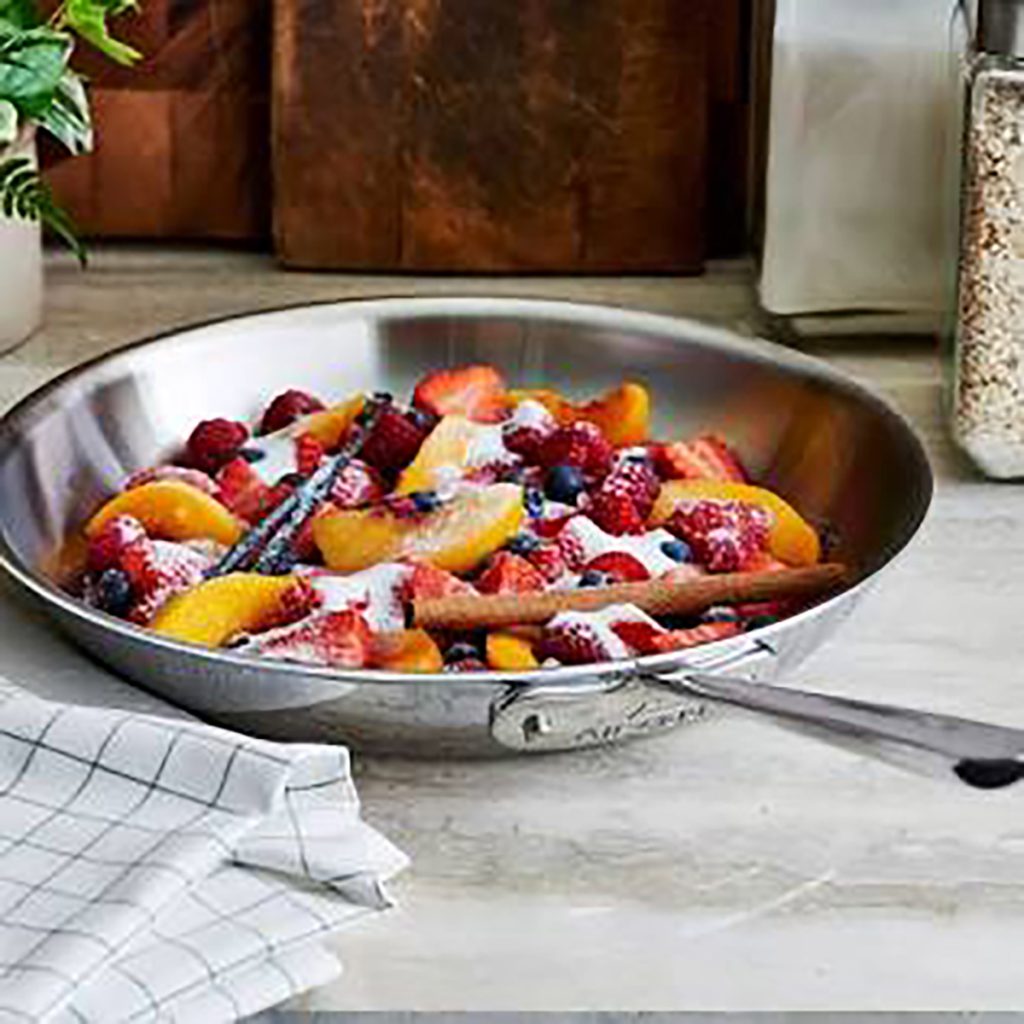
1. Best Overall Stainless Steel Pan: All Clad D3 10 Inch Fry Pan
The gold standard featuring 3 ply construction (stainless steel sandwiched around an aluminum core). Made in the USA with exceptional heat distribution and a lifetime warranty.
2. Best Budget Stainless Steel: Tramontina Tri Ply Clad 10 Inch Fry Pan
Offers tri ply clad performance comparable to high end brands at a fraction of the cost. Excellent heat retention and build quality.
3. Best Non Stick Pan: OXO Good Grips 10 Inch Non Stick Fry Pan
Constructed with heavy gauge anodized aluminum for even heating, comfortable stay cool handles, and reliable release for daily egg and breakfast prep.
4. Best Ceramic Non Stick: GreenPan GP5 10 Inch Fry Pan
A solid PTFE/PFOA free option utilizing a sand derived ceramic coating for health conscious cooks.
The Final Verdict: You Actually Need Both
There is no single pan that excels at every task:
- Use an 8 inch or 10 inch Non Stick Skillet for eggs, pancakes, delicate fish, and quick cleanups.
- Use a 10 inch or 12 inch Stainless Steel Skillet for searing meats, making pan sauces, and oven roasting.
Investing in these two core pieces will cover virtually all your everyday cooking needs without cluttering your kitchen with unnecessary sets.