Let’s face it. You can have a $400 Dutch oven, a fancy stand mixer, and a kitchen full of gadgets. But if your knife is dull, cooking is miserable. You crush your tomatoes instead of slicing them. You slip on an onion and almost lose a finger. A good knife doesn’t just make cooking faster; it makes it safer.
But walk into a kitchen store, and it’s overwhelming. There are German knives, Japanese knives, forged blades, stamped blades, and price tags that range from $20 to $300.
You don’t need a $300 knife. You need the right knife. Here is the honest, no nonsense guide to picking the perfect chef’s knife for your kitchen.
Disclosure: As an Amazon Associate, I earn from qualifying purchases. If you click on a link and make a purchase, I may receive a small commission at no extra cost to you.
The Steel: German vs. Japanese
The first thing you need to understand is the steel. There are two main types of steel used in Western kitchens: German and Japanese.
- German Steel (e.g., Wüsthof, Zwilling): Softer steel (56-58 Rockwell hardness), making it highly durable and chip resistant when hitting bones or hard squashes. Easy to maintain, though requires slightly more frequent honing.
- Japanese Steel (e.g., Shun, Mac): Harder steel (60-62 Rockwell hardness), allowing for razor sharp edges that slide effortlessly through produce. However, it is more brittle and can chip if twisted against hard foods.
Forged vs. Stamped: The Big Myth
You’ll hear people say, “Forged knives are better than stamped knives.” This isn’t entirely true.
- Forged Blades: Crafted from a single heated steel bar hammered into shape. They feature a thick bolster, heavier weight, and substantial feel in the hand.
- Stamped Blades: Cut from large steel sheets like a cookie cutter. Lighter with no heavy bolster, high quality stamped knives allow faster chopping without wrist fatigue.
The Fit: Why You Must Hold It
You cannot buy a knife online just by looking at a picture. You have to hold it.
When holding a chef’s knife, use the “pinch grip” pinch the blade between your thumb and index finger where the blade meets the handle, then wrap your remaining three fingers around the handle. This provides maximum stability and control over every cut.
The Size: The 8 Inch Rule
If you are buying your first chef’s knife, buy an 8 inch knife.
It is the ideal “Goldilocks” size 6 inch knives are too small for large cabbages, while 10-inch knives are too unwieldy for everyday home kitchens. An 8 inch blade comfortably handles 90% of prep tasks.
The Three Best Knives to Buy Right Now
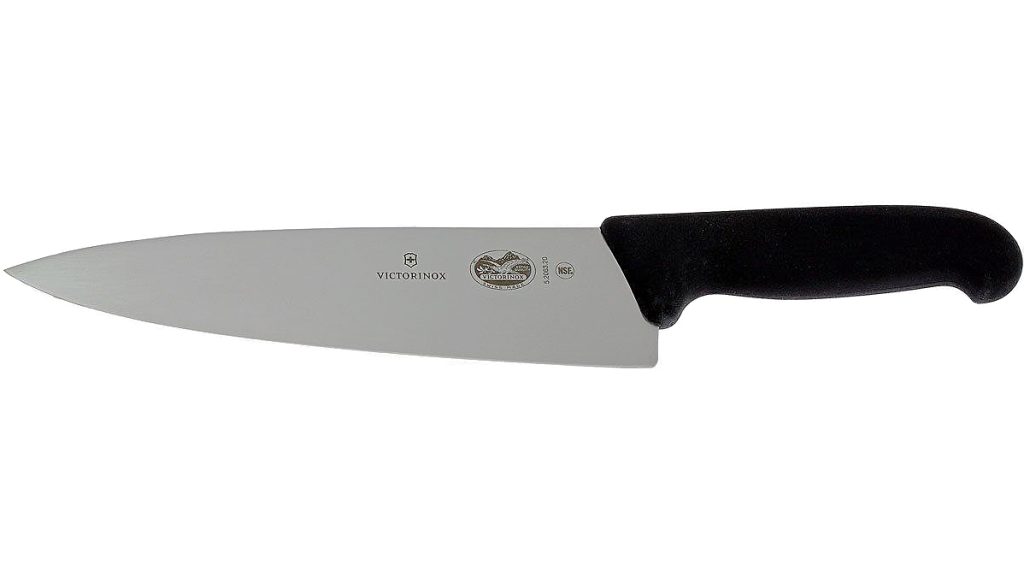
1. The Budget Hero: Victorinox Swiss Army 8 Inch Chef’s Knife
The top choice among professional chefs for budget home use. It features a lightweight, ergonomic handle with stamped Swiss steel that holds a remarkably sharp edge at an affordable price point.
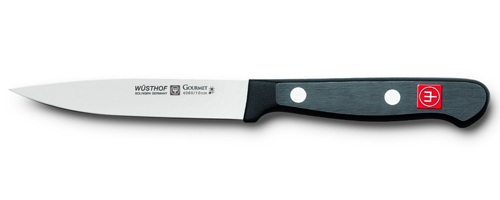
2. The German Workhorse: Wüsthof Classic 8 Inch Chef’s Knife
A heavy duty forged German knife with a full bolster that lasts for decades. Built like a tank to handle tough cutting jobs effortlessly.
3. The Japanese Precision: Shun Classic 8 Inch Chef’s Knife
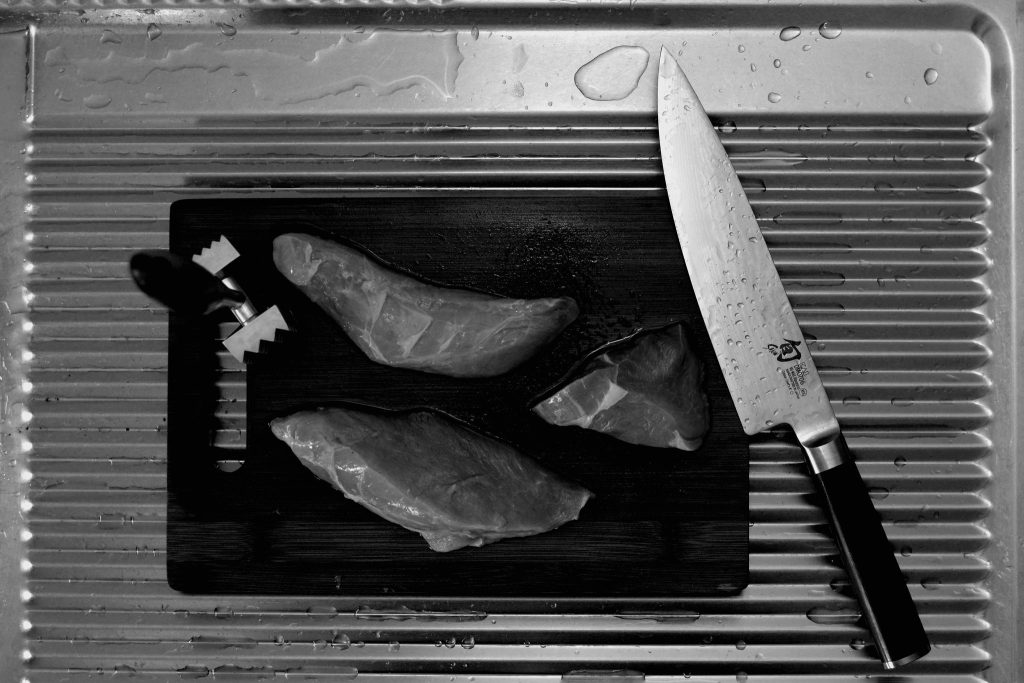
Featuring a beautiful Damascus steel pattern and Pakkawood handle, this Japanese knife delivers laser like sharpness for precision slicing.
The Maintenance Reality Check
- Never Use the Dishwasher: High heat and harsh detergents dull edges, ruin handles, and cause chipping. Hand wash immediately with warm soapy water and towel dry.
- Use a Honing Rod Weekly: Realigns the microscopic teeth of the blade’s edge between sharpenings.
- Sharpen Once a Year: Use a whetstone or professional service when the blade eventually loses its edge.
- Skip the 15 Piece Knife Block: You only need three core knives: one chef’s knife, one paring knife, and one serrated bread knife.
Frequently Asked Questions (FAQs)
1. What size chef’s knife should a beginner buy?
An 8 inch chef’s knife is the best overall size for balance, versatility, and ease of control.
2. How often should I hone vs. sharpen my knife?
Hone your knife weekly with a steel rod to maintain edge alignment, and sharpen it with a whetstone or professional service once a year.
3. Can I put a high quality chef’s knife in the dishwasher?
No. Always hand wash and towel dry immediately to protect the blade edge and handle material.
The Final Verdict
Choosing the perfect chef’s knife comes down to comfort and cooking style. Choose the Victorinox for maximum value, the Wüsthof for rugged durability, or the Shun for extreme precision.
Overall Rating: 4.8 out of 5 Stars